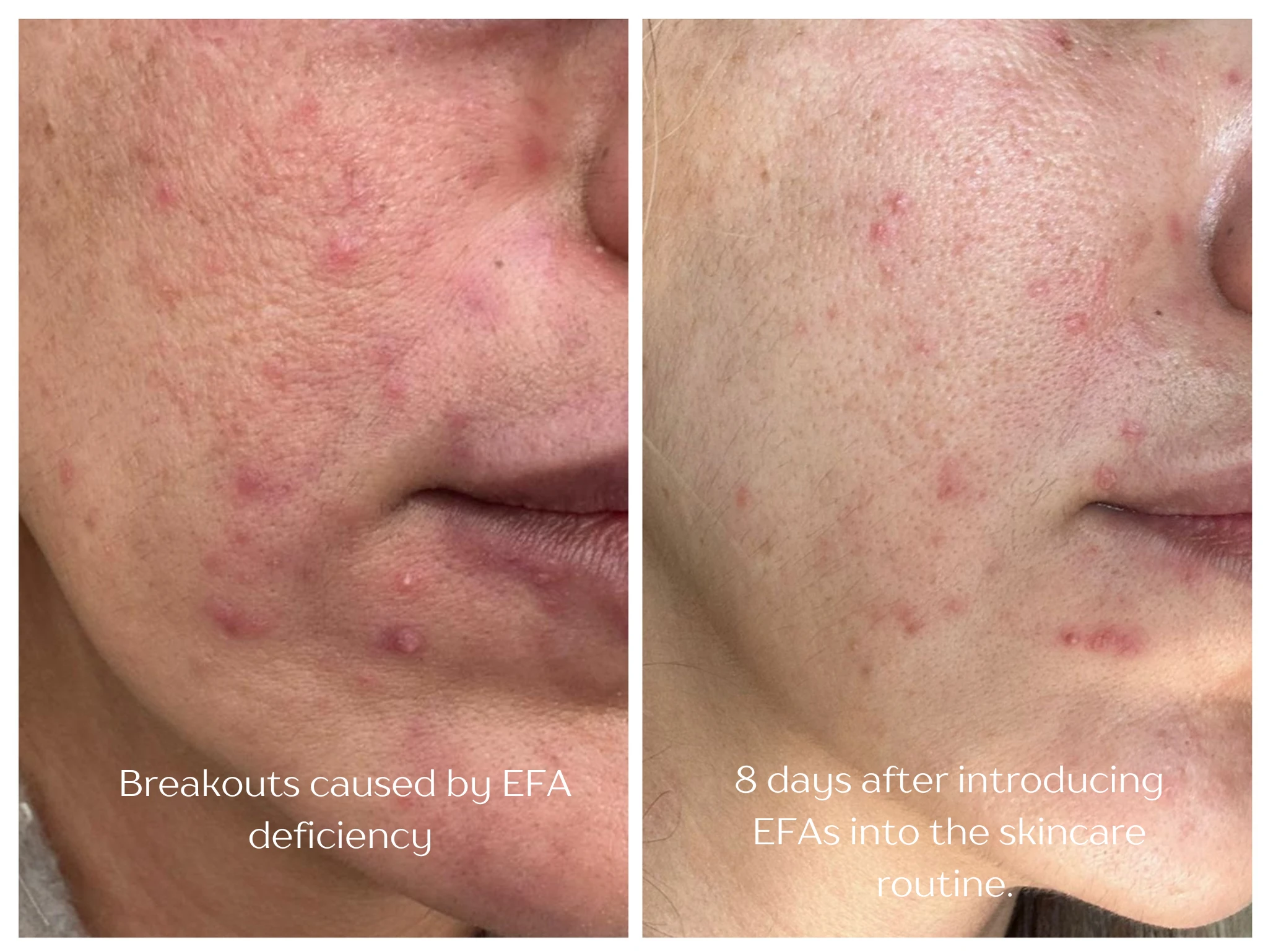
For decades, the skincare industry has promoted the idea that acne is simply the result of oily skin. But the truth is more complex: not all acne is caused by oily skin. Many people struggling with persistent breakouts actually lack essential fatty acids that weaken the skin barrier.
The Myth of Oily Skin and Acne
The traditional explanation was straightforward: excess oil causes excess keratinisation that clogs pores, bacteria thrive in trapped sebum resulting in inflammation and pimples. This belief led to countless products and treatments designed to strip away oil, including harsh, drying cleansers and toners, aggressive exfoliants, and professional procedures that left skin tight, red, and vulnerable.
But many people who struggle with persistent breakouts don't have oily skin at all. They rather lack essential fatty acids that weaken the skin barrier.
Why Stripping Treatments Make Acne Worse
If you've tried every "acne solution" on the market but your skin only got worse, you're not alone. Treatments that aim to remove oil from the skin may provide temporary relief, but they actually:
- Disrupt the skin barrier, making it more permeable and prone to inflammation
- Trigger sebum overproduction, leading to even more congestion and breakouts
- Strip away the vital lipids your skin needs to stay balanced and resilient
The outcome? A frustrating, vicious cycle of dryness, irritation, and breakouts that feels never-ending.
The Missing Piece: Essential Fatty Acids
Essential fatty acids (EFAs) are crucial for healthy skin. They're called "essential" because they are the building blocks of cell membranes, body fats, hormones and hormone-like substances, but the body cannot metabolise them on its own—we must obtain them through our diet or skincare products applied topically.
EFAs like Omega-3s and Omega-6s play critical roles in:
- Maintaining the integrity of the skin barrier
- Regulating inflammation and inflammatory response
- Supporting normal sebum quality and quantity
Research shows that acne-prone individuals often have low levels of Omega-3s, particularly EPA in their sebum. This deficiency makes the sebum thicker and more likely to clog pores, setting the stage for breakouts and inflammation.
Signs Your Skin Lacks Essential Fatty Acids
- Persistent breakouts despite "oil-control" treatments
- Dry, flaky patches alongside breakouts or acne
- Tight, dehydrated skin, fine lines and wrinkles
- Irritated, inflamed skin conditions
- Poor healing of blemishes and scars
- Matt looking, dull complexion
- Capillary damage
- Visible signs of premature ageing
The Causes of Essential Fatty Acid Deficiency:
- Fat-free diet
- Diet high in ultra-processed food (high Omega-6 content)
- Impaired absorption
- Oxidative stress caused by stress hormones
A New Approach to Acne Care
Instead of fighting breakouts and reducing oil production even further, acne and breakout care should focus on restoring balance with:
- Gentle cleansing that respects the skin barrier and restores pH
- Barrier-focused skincare that nourishes rather than strips
- Topical EFAs, products with Omega-3s
- Dietary support to balance omega-3 and omega-6 ratio
The Conclusion
Your skin needs nourishment, not punishment.
Acne isn't always about oily skin. Sometimes, it's about what your skin is missing. By replenishing essential fatty acids and restoring the skin barrier, you can ultimately break free from the cycle of harsh treatments and worsening breakouts.
Struggling with persistent breakouts? Let's identify the root cause together.
Book a ConsultationRelated Posts
Corneotherapy: The Science of Skin Barrier Health
Discover how Corneotherapy's scientific approach to skincare can transform your skin by focusing on barrier repair and protection.
New Clients' First Consultation
Comprehensive skin analysis to identify the root causes of your skin concerns and create a personalised treatment plan.