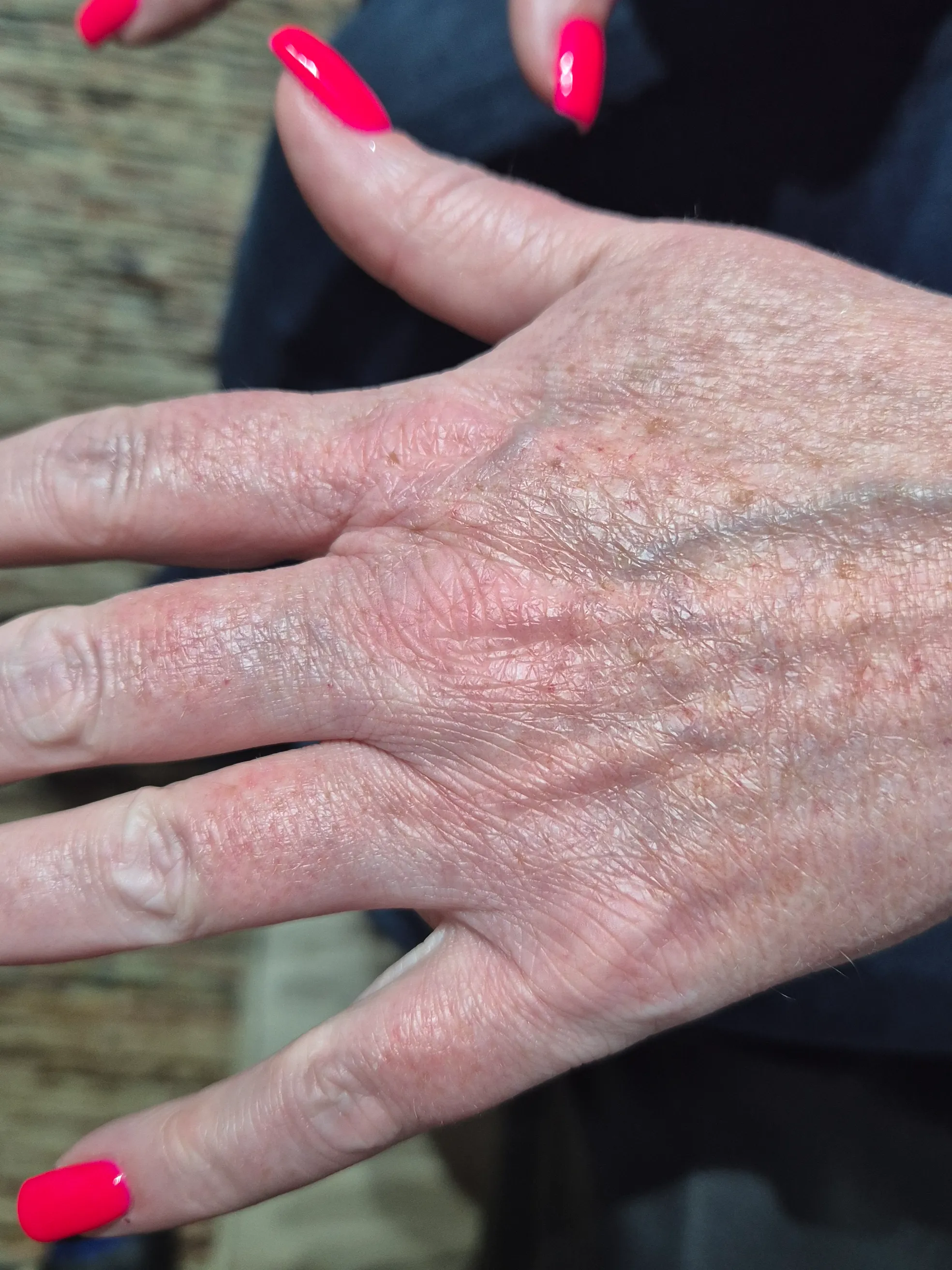
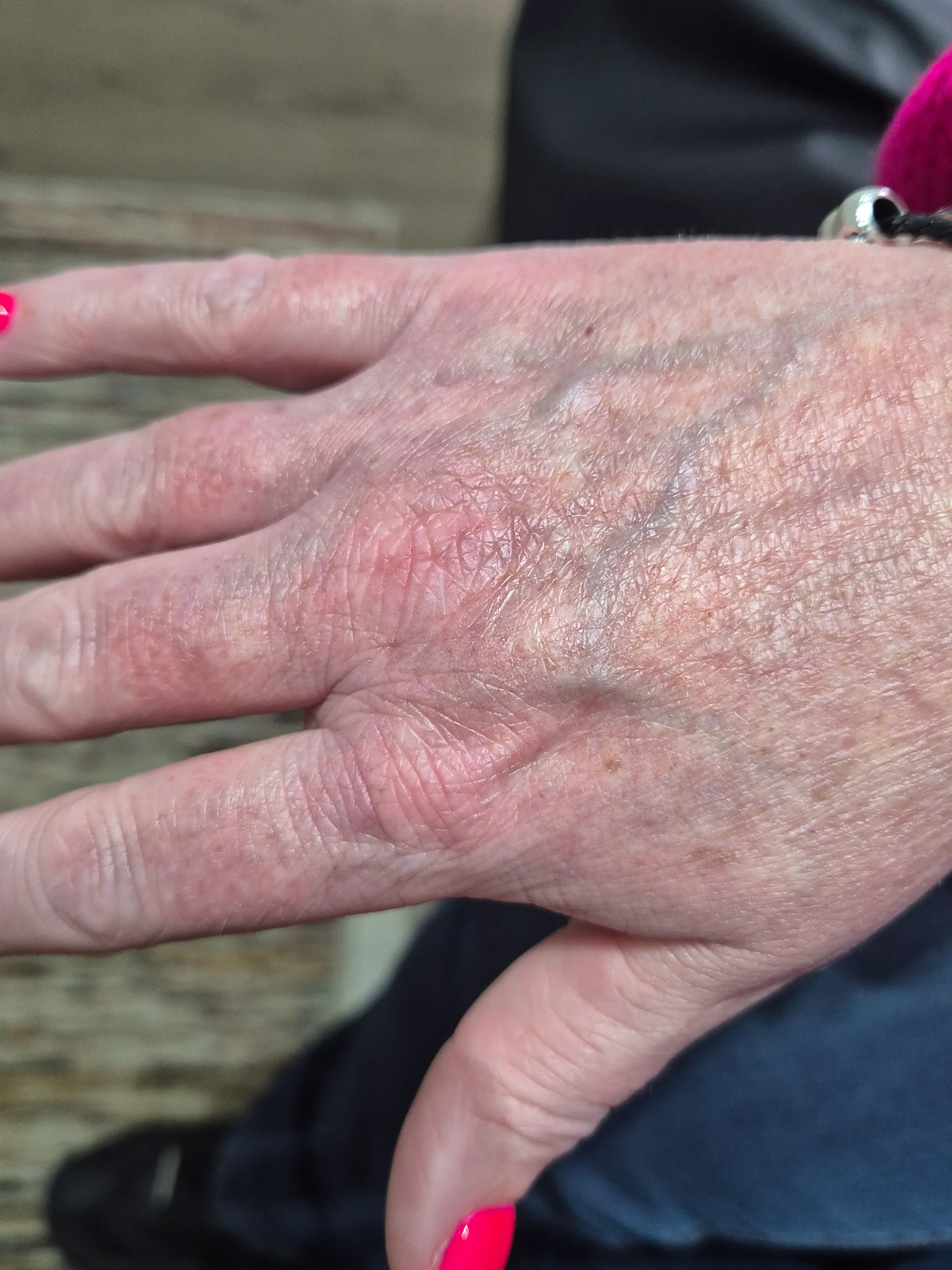
Dry, cracked "winter hands" are one of the most common seasonal skin complaints - and in spite how dramatic they can look and feel, they're rarely eczema.
They're usually a loud, uncomfortable message from the skin barrier saying: "I'm neglected, I'm overwhelmed, underprotected, and drying out faster than you're helping me recover."
Why "winter hands" happen
Cold weather brings a perfect storm of barrier stressors. Each one seems small, but together they push the skin past its coping capacity.
- Frequent handwashing - Soap with harsh emulsifiers and the use of hot water together dissolve the natural lipids that keep the barrier intact. The stronger emulsifiers the soap contains the stronger they bond to the lipid in our skin.
- The "wash out" effect - Moisture hanging in the air on a damp day can actually make things worse for a compromised barrier. The emulsifiers in the skin - the same ones that bonded tightly to the natural protective lipids - also bind to that environmental moisture and start to "wash out" those essential lipids, leaving the skin even drier and more vulnerable.
- Low humidity - Central heating, heating in the car makes air dry. Dry air makes skin drier because it changes the direction of water movement. This follows a simple physical principle: water moves from where there is more of it to where there is less. until it reaches a balance with the surrounding air. It means when the air contains very little humidity, it pulls moisture out of the skin's deeper layers. The skin barrier is designed to hold water in, but when it damaged and the surrounding environment is extremely dry, evaporation accelerates faster causing TEWL.
- Wind exposure - Wind accelerates TEWL and creates microfissures. These microscopic breaks form when the stratum corneum becomes too dry and brittle. The corneocytes (the "bricks") lose water and flexibility, and the lipids (the "mortar") become disorganised, then when the skin moves or is exposed to friction or wind, these weakened areas split into tiny cracks They're so small that you often can't see them individually, but you can feel their effects: stinging, burning, roughness, and that tight, splintery sensation when the skin bends or stretches.
- Neglect - Hands are often the last body part people moisturise, even though they're the most exposed.
When these stressors stack up, the skin barrier becomes depleted. The result is dryness, cracking, peeling, burning, redness and sensitivity - symptoms that mimic eczema but often stem from simple barrier exhaustion.
Daily habits that prevent winter hands
Hands cannot recover if every wash strips away more lipids than the skin can replace.
- Break wash out effect: witch to a naturalemulsifier - Dermaviduals Total Cleansing Cream (Reinigungscreme) is a perfect choice. It contains DMS (Derma Membrane Structure) components, natural oils, and sugar-based surfactants that are gentle and protective to the skin.
- Avoid hot water - warm is enough to remove dirt without dissolving lipids.
- Limit unnecessary washing - This reduces the "lipid loss + emulsifier residue" cycle that sets the stage for cracking.
- Avoid sitting directly next to radiators or car heaters blowing onto your hands.
- Moisturise strategically, not just frequently - The right product + the right timing makes the biggest difference - Dermaviduals Hand Cream provides perfect protection with DMS structure, high ceramide-rich lipids, phosphatidylcholine and urea content. Free from emulsifiers, fragrances and preservatives.
- Wear thin cotton gloves overnight - this accelerates repair and reduces morning cracking.
- Avoid any exfoliants (scrubs, acids, retinoids) - They remove the protective barrier leaving the skin vulnerable and prone to all those aforementioned factors.
Struggling with dry, cracked winter hands? Let's create a personalised hand care plan for you.
Book a Skin ConsultationRelated Posts
Signs of a Compromised Skin Barrier: Over-Exfoliation
Discover the signs of over-exfoliation and compromised skin barrier. Learn how Dermaviduals repair regimen can restore your skin's health.
Corneotherapy: The Science of Skin Barrier Health
Discover how Corneotherapy's scientific approach to skincare can transform your skin by focusing on barrier repair and protection.