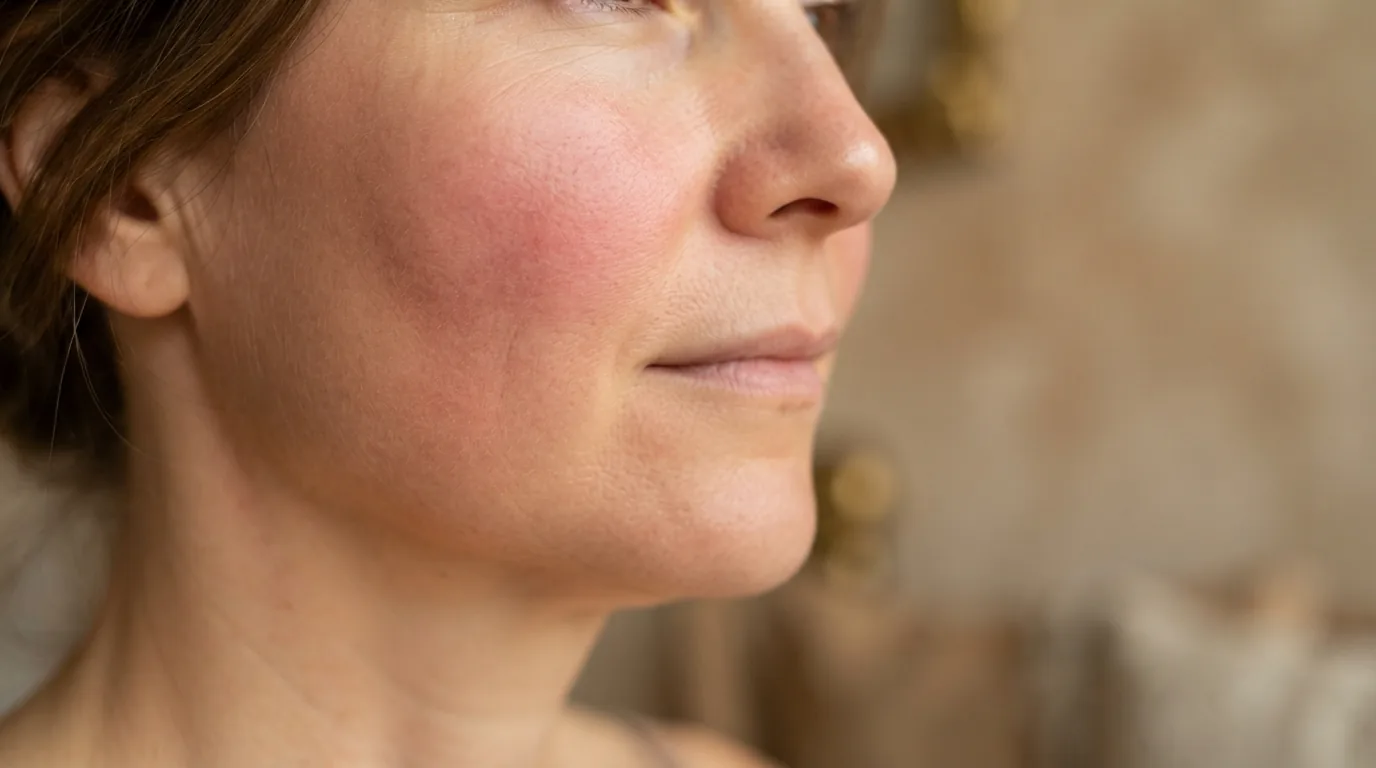
If you live with rosacea, you already know your skin can react to things that are considered gentle or harmless. One common example is Hyaluronic acid, the ingredient known for hydration, yet it can sometimes trigger stinging, flushing, or irritation in rosacea-prone skin.
It’s because Rosacea is not simply sensitive skin. It is a chronic inflammatory disorder where the skin’s barrier, vascular system, and immune responses are already operating in a heightened, easily disrupted state.
Because of this, even ingredients that are widely considered gentle or hydrating, like Hyaluronic acid can unexpectedly worsen symptoms.
To understand why rosacea flare-ups happen after using Hyaluronic acid requires looking deep beneath the surface, at the level of enzymes, fluid balance and barrier physiology.
How Rosacea Skin Works Differently
Your skin’s enzymatic system is a delicate fluid-dependent network. It relies on a very precise balance of water and lipids to keep enzymes functioning normally.
These enzymes help with:
- Natural peeling
- Lipid production
- Barrier repair
- Immune signalling
In rosacea, inflammation increases fluid in the skin. This alone can make enzymes more reactive. When something further shifts this fluid balance, like Hyaluronic acid, the skin can quickly become irritated.
Why Hyaluronic Acid Can Cause Stinging
Hyaluronic acid and other humectants (like glycerine or urea) attract water. In healthy skin, this is usually helpful. In rosacea skin it can create problems:
-
Too much water movement in an already inflamed skin.
Inflamed skin draws in more fluid. Adding strong humectants increases this water flow even more, leading to overhydration rather than balanced hydration.
-
Excess hydration overstimulates enzymes
When water content rises beyond the skin’s natural set point, enzymes become overactive, accelerating natural peeling and barrier turnover, that can lead to increased stinging, flushing, surface irritation and barrier fragility.
-
Weakened barrier causes water loss (TEWL)
Ironically, overhydration can weaken the barrier, causing more water to escape, triggering a cycle of dryness, inflammation and reactivity.
In rosacea skin the goal is to:
- Support the skin’s natural water-lipid balance
- Reduce enzymatic overstimulation
- Minimise inflammatory triggers
- Strengthen barrier lipids rather than flood the skin with water-binding molecules
Corneotherapy emphasises lipid dominant moisturisation, gentle barrier repair, and avoiding unnecessary humectant load.
When we understand the biology, it becomes clear: More is not better. Balanced is better.
For rosacea-prone skin, respecting the skin’s fluid dynamics is an ethical responsibility. Overloading the skin with humectants and film-formers may feel comforting in the moment, but it can quietly destabilise the delicate systems we aim to protect.
Supporting the skin means working with its physiology, not overwhelming it.
Does your skin sting, flush or react to products that should be gentle? Let’s look at what your barrier actually needs.
Book a Skin ConsultationRelated Posts
Signs of a Compromised Skin Barrier: Over-Exfoliation
Discover the signs of over-exfoliation and compromised skin barrier. Learn how Dermaviduals repair regimen can restore your skin's health.
Electrolysis Hair Removal: A Corneotherapist's Guide
Why electrolysis is the safest permanent hair removal method for sensitive, rosacea and acne-prone skin.